Thursday, 29 January 2015

Tuesday, 27 January 2015
Basics explained: Know your fixed deposits
Bank deposits are
one of the most preferred investment options in India. It is consider
safe and not risky, especially in comparison with the stock markets and
mutual funds.
Here are 10 things you need to know about term deposits:
1. Types of deposits: There are two key types of term deposits – fixed deposits and recurring deposits. A fixed deposit is where you invest all your money at one-go. A recurring deposit, on the other hand, is when you invest your money in installments.
2. Fixed return: When you opt for a term deposit, you are parking your funds in a particular bank deposit for a fixed period of time. In exchange for holding your money for a longer period of time, banks offer you to pay a fixed interest. This makes a term deposit a very safe option. This interest payment acts as your profit from the investment. Also, senior citizens usually get a higher interest. Currently, fixed deposits offer interest rates up to 10.25%. Recurring deposits usually offer a lower interest rate than fixed deposits.
3. Tenure of your choice: Term deposits come with a variety of tenures – the amount of time the money is held with the bank. This could be as short as 7 days and as long as 10 years.
4. Interest payout: You can decide when you want your interests to be paid. This can be done at the end once the deposit matures. If not, you can opt for regular interest payments on quarterly, half-yearly or annual intervals. Some banks also offer you a choice to reinvest your interest payments.
5. Longer the duration, higher the return: Term deposits offer a wide variety of interest rates. It changes with the duration of the deposit. Greater the duration, larger is the interest rate offered. This is to attract investors to deposit money for as longer a time as possible. Also, the bank pays interests regularly. Over a period of time, this money can either be reinvested in the same deposit or saved in your bank account. This would earn you additional interests, thus increasing your total return.
6. Cheaper borrowing for banks: Banks usually borrow money to give out as loans. The interest payments on loans by borrowers are banks’ key source of income. Banks can borrow from other banks and the Reserve Bank of India. However, these have restrictions are considered costlier. The money you deposit with your bank, on the other hand, acts as a source of cheap borrowing for the bank. However, the money in the savings accounts could be withdrawn any moment by depositors. This increases risks for the banks. For this reason, banks actively try to attract deposits to invest in term deposits. This is because, the amount in deposits are unlikely to be touched for a longer period of time.
7. Breaking a deposit: The only rule of a term deposit is that once you deposit, you cannot touch this money. If you wish to reclaim your deposit amount, you will be fined a particular sum or your total interest payment may be reduced. Sometimes, banks may only allow you to withdraw the money after a certain minimum period. Ensure you get these details before investing.
8. Overdraft against your fixed deposit: If you are in desperate need of liquid cash, and you have withdrawn all of your funds in your bank accounts, you can borrow on the basis of your fixed deposits. This is called the overdraft facility. However, there is a limit to how much you can borrow under this service. Moreover, it may not be interest-free. Check with your banks before opting for the facility.
9. Taxation of deposits: Interest payments on fixed deposits are taxable. This depends on your overall income tax bracket. For example, if you fall in the 20% income tax bracket, your interest payments would be taxed at the same rate. This is why fixed deposits are usually not preferred by those in the 30% bracket. Also, if your total interest payment in a year exceeds Rs 10,000, then the bank cuts 10% as tax deducted at source (TDS). However, if you submit the Form 15G/H to the bank stating you have no taxable income, then the bank will not deduct TDS. You can also split your term deposits across banks to ensure the interest does not exceed Rs 10,000 in a single bank.
10. Tax savings: Banks offer fixed deposits for tax-saving purposes. The amount you save in such deposits can reduce your total taxable income, and thus help you save taxes. Tax-saving deposits have a minimum tenure of 5 years and a maximum of 10 years. The government has also capped the maximum amount you can invest in such a deposit for tax purposes to Rs 1 lakh per year. However, the interest you earn will be taxable.
Here are 10 things you need to know about term deposits:
1. Types of deposits: There are two key types of term deposits – fixed deposits and recurring deposits. A fixed deposit is where you invest all your money at one-go. A recurring deposit, on the other hand, is when you invest your money in installments.
2. Fixed return: When you opt for a term deposit, you are parking your funds in a particular bank deposit for a fixed period of time. In exchange for holding your money for a longer period of time, banks offer you to pay a fixed interest. This makes a term deposit a very safe option. This interest payment acts as your profit from the investment. Also, senior citizens usually get a higher interest. Currently, fixed deposits offer interest rates up to 10.25%. Recurring deposits usually offer a lower interest rate than fixed deposits.
3. Tenure of your choice: Term deposits come with a variety of tenures – the amount of time the money is held with the bank. This could be as short as 7 days and as long as 10 years.
4. Interest payout: You can decide when you want your interests to be paid. This can be done at the end once the deposit matures. If not, you can opt for regular interest payments on quarterly, half-yearly or annual intervals. Some banks also offer you a choice to reinvest your interest payments.
5. Longer the duration, higher the return: Term deposits offer a wide variety of interest rates. It changes with the duration of the deposit. Greater the duration, larger is the interest rate offered. This is to attract investors to deposit money for as longer a time as possible. Also, the bank pays interests regularly. Over a period of time, this money can either be reinvested in the same deposit or saved in your bank account. This would earn you additional interests, thus increasing your total return.
6. Cheaper borrowing for banks: Banks usually borrow money to give out as loans. The interest payments on loans by borrowers are banks’ key source of income. Banks can borrow from other banks and the Reserve Bank of India. However, these have restrictions are considered costlier. The money you deposit with your bank, on the other hand, acts as a source of cheap borrowing for the bank. However, the money in the savings accounts could be withdrawn any moment by depositors. This increases risks for the banks. For this reason, banks actively try to attract deposits to invest in term deposits. This is because, the amount in deposits are unlikely to be touched for a longer period of time.
7. Breaking a deposit: The only rule of a term deposit is that once you deposit, you cannot touch this money. If you wish to reclaim your deposit amount, you will be fined a particular sum or your total interest payment may be reduced. Sometimes, banks may only allow you to withdraw the money after a certain minimum period. Ensure you get these details before investing.
8. Overdraft against your fixed deposit: If you are in desperate need of liquid cash, and you have withdrawn all of your funds in your bank accounts, you can borrow on the basis of your fixed deposits. This is called the overdraft facility. However, there is a limit to how much you can borrow under this service. Moreover, it may not be interest-free. Check with your banks before opting for the facility.
9. Taxation of deposits: Interest payments on fixed deposits are taxable. This depends on your overall income tax bracket. For example, if you fall in the 20% income tax bracket, your interest payments would be taxed at the same rate. This is why fixed deposits are usually not preferred by those in the 30% bracket. Also, if your total interest payment in a year exceeds Rs 10,000, then the bank cuts 10% as tax deducted at source (TDS). However, if you submit the Form 15G/H to the bank stating you have no taxable income, then the bank will not deduct TDS. You can also split your term deposits across banks to ensure the interest does not exceed Rs 10,000 in a single bank.
10. Tax savings: Banks offer fixed deposits for tax-saving purposes. The amount you save in such deposits can reduce your total taxable income, and thus help you save taxes. Tax-saving deposits have a minimum tenure of 5 years and a maximum of 10 years. The government has also capped the maximum amount you can invest in such a deposit for tax purposes to Rs 1 lakh per year. However, the interest you earn will be taxable.
'Captain Cool' Dhoni finally loses his composure
 MS Dhoni: Amused no more. (Getty Images)
India ODI captain MS Dhoni has expressed indignation over how his name keeps popping up in controversies around Indian cricket. As captain of Chennai Super Kings, he was questioned during investigations around establishing whether Gurunath Meiyappan was a team official or if he was just being enthusiastic about cricket. During court hearings, a prosecution lawyer had accused Dhoni of not being entirely honest with the investigators. The Supreme Court verdict on January 22 remained silent on any player involvement, but it established Gurunath as a team official involved in illegal betting.
Dhoni has never spoken about any controversy, but a day before India's crucial ODI against Australia in Sydney - a match they need to win or tie to keep reasonable their requirement in the last game against England if they are to make the final of the triangular series - Dhoni was asked if he was at least happy that the court verdict had put an end to the speculation. Dhoni didn't say much here either, choosing to reply rhetorically.
"I know one thing, irrespective of what is there, when it comes to Indian cricket, my name keeps popping up," Dhoni said. "This [issue] has been settled, [but] something new will pop up. It keeps popping up. I am quite used to it. If there is nothing, some speculative story comes up, big or small. I have to keep dealing with all these things. It is [just] the end of one story, something else may start in a couple of days' time, and you can monitor it."
Dhoni did have to deal with slanderous stories during the period. He even sued a news channel in March last year for defamation. Some of the reporting at that time was said to be based on information from interviews between Tamil Nadu police and an alleged bookie. Ever since he became the captain, Dhoni has been distrustful of news coverage in India, and has never sought to clear his name in any of the controversies he says are cooked up.
Even when Dhoni retired abruptly from Test cricket, the only official explanation was these words in the BCCI press release: "citing the strain of playing all formats of cricket". Coming so close to the World Cup, in the middle of a series, the retirement decision did draw speculation of all sorts all around, but Dhoni has refused to discuss it since.
"I know one thing, irrespective of what is there, when it comes to Indian cricket, my name keeps popping up," Dhoni said.
MS Dhoni: Amused no more. (Getty Images)India ODI captain MS Dhoni has expressed indignation over how his name keeps popping up in controversies around Indian cricket. As captain of Chennai Super Kings, he was questioned during investigations around establishing whether Gurunath Meiyappan was a team official or if he was just being enthusiastic about cricket. During court hearings, a prosecution lawyer had accused Dhoni of not being entirely honest with the investigators. The Supreme Court verdict on January 22 remained silent on any player involvement, but it established Gurunath as a team official involved in illegal betting.
Dhoni has never spoken about any controversy, but a day before India's crucial ODI against Australia in Sydney - a match they need to win or tie to keep reasonable their requirement in the last game against England if they are to make the final of the triangular series - Dhoni was asked if he was at least happy that the court verdict had put an end to the speculation. Dhoni didn't say much here either, choosing to reply rhetorically.
"I know one thing, irrespective of what is there, when it comes to Indian cricket, my name keeps popping up," Dhoni said. "This [issue] has been settled, [but] something new will pop up. It keeps popping up. I am quite used to it. If there is nothing, some speculative story comes up, big or small. I have to keep dealing with all these things. It is [just] the end of one story, something else may start in a couple of days' time, and you can monitor it."
Dhoni did have to deal with slanderous stories during the period. He even sued a news channel in March last year for defamation. Some of the reporting at that time was said to be based on information from interviews between Tamil Nadu police and an alleged bookie. Ever since he became the captain, Dhoni has been distrustful of news coverage in India, and has never sought to clear his name in any of the controversies he says are cooked up.
Even when Dhoni retired abruptly from Test cricket, the only official explanation was these words in the BCCI press release: "citing the strain of playing all formats of cricket". Coming so close to the World Cup, in the middle of a series, the retirement decision did draw speculation of all sorts all around, but Dhoni has refused to discuss it since.
Abbott named Bradman Young Cricketer of the Year
 Sean Abbott: a year like none other.
Sean Abbott,
the New South Wales allrounder, was anointed the Bradman Young
Cricketer of the Year at the Allan Border Medal night in Sydney, a
reward for his outstanding displays across all formats that also saw him
win the Steve Waugh Medal as the best New South Wales cricketer of
2013-14.
Sean Abbott: a year like none other.
Sean Abbott,
the New South Wales allrounder, was anointed the Bradman Young
Cricketer of the Year at the Allan Border Medal night in Sydney, a
reward for his outstanding displays across all formats that also saw him
win the Steve Waugh Medal as the best New South Wales cricketer of
2013-14.
Not present for the awards night at Carriageworks due to his place in the Sydney Sixers squad for the Big Bash League final in Canberra on Wednesday, Abbott spoke gratefully about the recognition of his peers. It has been a uniquely difficult season for Abbott, given his tragic connection to the death of Phillip Hughes by bowling the bouncer that freakishly felled the 25-year-old batsman in a Sheffield Shield match at the SCG in November.
"I am thankful for the support of the Australian cricket family and wider community, as well as my own family, close friends and team-mates, and especially my girlfriend Brier," Abbott said in his first public words since that day. "I feel privileged to receive such an award, especially after a couple of good seasons in a row on the field and some tough off seasons pushing myself to continually improve.
"I feel that this is a reward for a lot of good work and finally putting some consistent good performances together. I am looking to improve my cricket every day and to keep putting good performances on the board for the NSW Blues and the Sydney Sixers and if I continue to perform consistently well, hopefully contribute to the Australian cricket team down the track."
Abbott polled 42% of the votes submitted by Australia's cricketers, well ahead of the next best tally for his NSW team-mate Gurinder Sandhu (15%) and Victoria's Marcus Stoinis (14%). Following his Steve Waugh Medal victory, Abbott excelled for the National Performance Squad during the Top End series against Australia A, India A and South Africa A, before winning selection for the limited-overs component of the tour to the UAE to play Pakistan.
More recently, he turned in a striking display against Queensland at the SCG, claiming the startling figures of 6 for 14 to help deliver victory for the Blues in their first match since taking time out following the loss of Hughes.
It has been a uniquely difficult season for Abbott, given his tragic connection to the death of Phillip Hughes.
 Sean Abbott: a year like none other.
Sean Abbott,
the New South Wales allrounder, was anointed the Bradman Young
Cricketer of the Year at the Allan Border Medal night in Sydney, a
reward for his outstanding displays across all formats that also saw him
win the Steve Waugh Medal as the best New South Wales cricketer of
2013-14.
Sean Abbott: a year like none other.
Sean Abbott,
the New South Wales allrounder, was anointed the Bradman Young
Cricketer of the Year at the Allan Border Medal night in Sydney, a
reward for his outstanding displays across all formats that also saw him
win the Steve Waugh Medal as the best New South Wales cricketer of
2013-14.Not present for the awards night at Carriageworks due to his place in the Sydney Sixers squad for the Big Bash League final in Canberra on Wednesday, Abbott spoke gratefully about the recognition of his peers. It has been a uniquely difficult season for Abbott, given his tragic connection to the death of Phillip Hughes by bowling the bouncer that freakishly felled the 25-year-old batsman in a Sheffield Shield match at the SCG in November.
"I am thankful for the support of the Australian cricket family and wider community, as well as my own family, close friends and team-mates, and especially my girlfriend Brier," Abbott said in his first public words since that day. "I feel privileged to receive such an award, especially after a couple of good seasons in a row on the field and some tough off seasons pushing myself to continually improve.
"I feel that this is a reward for a lot of good work and finally putting some consistent good performances together. I am looking to improve my cricket every day and to keep putting good performances on the board for the NSW Blues and the Sydney Sixers and if I continue to perform consistently well, hopefully contribute to the Australian cricket team down the track."
Abbott polled 42% of the votes submitted by Australia's cricketers, well ahead of the next best tally for his NSW team-mate Gurinder Sandhu (15%) and Victoria's Marcus Stoinis (14%). Following his Steve Waugh Medal victory, Abbott excelled for the National Performance Squad during the Top End series against Australia A, India A and South Africa A, before winning selection for the limited-overs component of the tour to the UAE to play Pakistan.
More recently, he turned in a striking display against Queensland at the SCG, claiming the startling figures of 6 for 14 to help deliver victory for the Blues in their first match since taking time out following the loss of Hughes.
Another young cricketer was
rewarded for his own progress, as the Western Australia swing bowler
Jason Behrendorff claimed the state player of the year award.
Behrendorff polled 22% of the vote, putting him ahead of his state
captain Adam Voges (16%), Queensland's exceptionally consistent leader James Hopes (15%), and the Bulls batsman Usman Khawaja (14%) who is currently out of action due to a serious knee injury.
The Belinda Clark Medal for
Australia's pre-eminent female cricketer was taken out by the Southern
Stars captain Meg Lanning for the second year in a row. Lanning's strong
polling across all three formats put her seven votes ahead of the
allrounder Ellyse Perry, while Elyse Villiani placed third in the
standings.
Full Transcript of 'Mann ki Baat'- Narendra Modi and Barack Obama
Hon'ble Shri Narendra Modi:
Today, Shri Barack Obama, President of the United States, joins us in a special programme of Mann Ki Baat. For the last few months, I have been sharing my "Mann Ki Baat" with you. But today, people from various parts of the country have asked questions.
But most of the questions are connected to politics, foreign policy, economic policy. However, some questions touch the heart. And I believe if we touch those questions today, we shall be able to reach out to the common man in different parts of the country. And therefore, the questions asked in press conferences, or discussed in meetings - instead of those - if we discuss what comes from the heart, and repeat it, hum it, we get a new energy. And therefore, in my opinion, those questions are more important. Some people wonder, what does "Barack" mean? I was searching for the meaning of Barack. In Swahili language, which is spoken in parts of Africa, Barack means, one who is blessed. I believe, along with a name, his family gave him a big gift.
African countries have lived
by the ancient idea of 'Ubuntu', which alludes to the 'oneness in
humanity'. They say - "I am, because we are". Despite the gap in
centuries and borders, there is the same spirit of Vasudhaiva
Kutumbakam, which speak of in India. This is the great shared heritage
of humanity. This unites us. When we discuss Mahatma Gandhi, we remember
Henry Thoreau, from whom Mahatma Gandhi learnt disobedience. When we
talk about Martin Luther King or Obama, we hear from their lips, respect
for Mahatma Gandhi. These are the things that unite the world.
Today, Barack Obama is with us. I will first request him to share his thoughts. Then, I and Barack will both answer the questions that have been addressed to us.
I request President Barack Obama to say a few words.
Hon'ble Shri Barack Obama:
Namaste! Thank you Prime Minister Modi for your kind words and for the incredible hospitality you have shown me and my wife Michelle on this visit and let me say to the people of India how honoured I am to be the first American President to join you for Republic Day; and I'm told that this is also the first ever Radio address by an Indian Prime Minister and an American President together, so we're making a lot of history in a short time.
Now to the people of India listening all across this great nation. It's wonderful to be able to speak you directly. We just come from discussions in which we affirmed that India and the United States are natural partners, because we have so much in common.
We are two great democracies, two innovative economies, two diverse societies dedicated to empowering individuals. We are linked together by millions of proud Indian Americans who still have family and carry on traditions from India.
And I want to say to the Prime Minister how much I appreciate your strong personal commitment to strengthening the relationship between these two countries.
People are very excited in the United States about the energy that Prime Minister Modi is bringing to efforts in this country to reduce extreme poverty and lift people up, to empower women, to provide access to electricity, and clean energy and invest in infrastructure, and the education system.
And on all these issues, we want to be partners. Because many of the efforts that I am promoting inside the United States to make sure that the young people get the best education possible, to make sure that the ordinary people are properly compensated for their labour, and paid fair wages, and have job security and health care. These are the same kinds of issues that Prime Minister Modi, I know cares so deeply about here.
And I think there's a common theme in these issues. It gives us a chance to reaffirm what Gandhi ji reminded us, should be a central aim of our lives. And that is, we should endeavour to seek God through service of humanity because God is in everyone. So these shared values, these convictions, are a large part of why I am so committed to this relationship.
I believe that if the United States and India join together on the world stage around these values, then not only will our peoples be better off, but I think the world will be more prosperous and more peaceful and more secure for the future. So thank you so much Mr. Prime Minister, for giving me this opportunity to be with you here today.
Hon'ble Shri Narendra Modi: Barack the first question comes from Raj from Mumbai
His question is, the whole world knows about your love for your daughters. How will you tell your daughters about youre experience of India? Do you plan to do some shopping for them?
Hon'ble Shri Barack Obama:
Well first of all they very much wanted to come. They are fascinated by India, Unfortunately each time that I have taken a trip here, they had school and they couldn't leave school. And in fact, Malia, my older daughter, had exams just recently.
They are fascinated by the culture, and the history of India, in part because of my influence I think, they are deeply moved by India's movement to Independence, and the role that Gandhi played, in not only the non-violent strategies here in India, but how those ended up influencing the non-violent Civil Rights Movement in the United States.
So when I go back I am going to tell them that India is as magnificent as they imagined. And I am quite sure that they are going to insist that I bring them back the next time I visit. It may not be during my Presidency, but afterwards they will definitely want to come and visit.
And I will definitely do some shopping for them. Although I can't go to the stores myself, so I have to have my team do the shopping for me. And I'll get some advice from Michelle, because she probably has a better sense of what they would like.
Hon'ble Shri Narendra Modi:
Barack said he will come with his daughters. I extend an invitation to you. Whether you come as President, or thereafter, India looks forward to welcoming you and your daughters.
Sanika Diwan from Pune, Maharashtra has asked me a question. She asks me, whether I have sought assistance from President Obama for the Beti Bachao, Beti Padhao Mission
Sanika you have asked a good question. There is a lot of worry because of the sex ratio in India. For every 1000 boys, the number of girls is less. And the main reason for this is that, there is a defect in our attitudes towards boys and girls.
Whether or not I seek help from President Obama, his life is in itself an inspiration. The way he has brought up his two daughters, the way he is proud of his two daughters.
In our country too, I meet many families who have only daughters. And they bring up their daughters with such pride, give them such respect, that is the biggest inspiration. I believe that inspiration is our strength. And in response to your question, I would like to say, to save the girl child, to educate the girl child, this is our social duty, cultural duty, and humanitarian responsibility. We should honour it.
Barack, there is a question for you. The second question for President Obama comes through e-mail: Dr. Kamlesh Upadhyay, a Doctor based in Ahmedabad, Gujarat - Your wife is doing extensive work on tackling modern health challenges like obesity and diabetes. These are increasingly being faced in India as well. Would you and the First Lady like to return to India to work on these issues after your Presidency, just like Bill and Melinda Gates?
(Hon'ble Barack Obama):
Well, we very much look forward to partnering with organizations, and the government and non-governmental organizations here in India, around broader Public Health issues including the issue of obesity.
I am very proud of the work that Michelle has done on this issue. We're seeing a world-wide epidemic of obesity, in many cases starting at a very young age. And a part of it has to do with increase in processed foods, not naturally prepared. Part of it is a lack of activity for too many children. And once they are on this path, it can lead to a life time of health challenges.
This is an issue that we would like to work on internationally, including here in India. And it is a part of a broader set of issues around global health that we need to address. The Prime Minister and I have discussed, for example, how we can do a better job in dealing with issues like pandemic.
And making sure that we have good alert systems so that if a disease like Ebola, or a deadly flu virus, or Polio appears, it is detected quickly and then treated quickly so that it doesn't spread. The public health infrastructure around the world needs to be improved.
I think the Prime Minister is doing a great job in focusing on these issues here in India. And India has a lot to teach many other countries who may not be advancing as rapidly in improving this public health sector. But it has an impact on everything, because if children are sick they can't concentrate in school and they fall behind. It has a huge economic impact on the countries involved and so we think that there is a lot of progress to be made here and I am very excited about the possibilities of considering this work even after I leave office.
Hon'ble Shri Narendra Modi:
Mr. Arjun asks me a question. An interesting question. He says he has seen an old photo of me as a tourist outside the White House. He asks me what touched me when I went there last September.
It is true that when I first went to America, I was not lucky enough to visit the White House. There is an iron fence far from the White House. We stood outside the fence and took a photograph. White House is visible in the background. Now that I have become Prime Minister, that photo too has become popular.
But at that time, I had never thought that sometime in my life, I would get a chance to visit the White House. But when I visited the White House, one thing touched my heart. I can never forget that. Barack gave me a book, a book that he had located after considerable effort.
That book had become famous in 1894. Swami Vivekananda, the inspiration of my life, had gone to Chicago to participate in the World Religions Conference. And this book was a compilation of the speeches delivered at the World Religions Conference. That touched my heart. And not just this. He turned the pages of the book, and showed me what was written there.
He had gone through the entire book! And he told me with pride, I come from the Chicago where Swami Vivekananda had come. These words touched my heart a lot. And I will treasure this throughout my life. So once, standing far from the White House and taking a photo, and then, to visit the White House, and to receive a book on someone whom I respect. You can imagine, how it would have touched my heart.
Barack there is a question for you. Himani from Ludhiana, Punjab. Question is for you ......:
Hon'ble Shri Barack Obama:
Well the question is "Did you both imagine you would reach the positions that you've reached today?"
And it is interesting, Mr. Prime Minister, your talking about the first time you visited White House and being outside that iron fence. The same is true for me. When I first went to the White House, I stood outside that same fence, and looked in, and I certainly did not imagine that I would ever be visiting there, much less living there.
You know, I think both of us have been blessed with an extraordinary opportunity, coming from relatively humble beginnings. And when I think about what's best in America and what's best in India, the notion that a tea seller or somebody who's born to a single mother like me, could end up leading our countries, is an extraordinary example of the opportunities that exist within our countries.
Now I think, a part of what motivates both you and I, is the belief that there are millions of children out there who have the same potential but may not have the same education, may not be getting exposed to opportunities in the same way, and so a part of our job, a part of government's job is that young people who have talent, and who have drive and are willing to work for, are able to succeed.
And that's why we are emphasizing school, higher education. Making sure that children are healthy and making sure those opportunities are available to children of all backgrounds, girls and boys, people of all religious faiths and of all races in the United States is so important.
Because you never know who might be the next Prime Minister of India, or who might be the next President of United States. They might not always look the part right off the bat. And they might just surprise you if you give them the chance.
Hon'ble Shri Narendra Modi:
Thank you Barack
Himani from Ludhiana has also asked me this question - did I ever imagine I would reach this high office?
No. I never imagined it. Because, as Barack said, I come from a very ordinary family. But for a long time, I have been telling everyone, never dream of becoming something.
If you wish to dream, dream of doing something. When we do something, we get satisfaction, and also get inspiration to do something new.
If we only dream of becoming something, and cannot fulfil the dream, then we only get disappointed. And therefore, I never dreamt of becoming something. Even today, I have no dream of becoming something.
But I do dream of doing something. Serving Mother India, serving 125 crore Indians, there can be no greater dream than this. That is what I have to do. I am thankful to Himani.
There is a question for Barack from Omprakash. Omprakash is studying Sanskrit at JNU. He belongs to Jhunjunu, Rajasthan. Om Prakash is convener of special centre for Sanskrit Studies in JNU.
Hon'ble Shri Barack Obama:
Well this is a very interesting question. His question is, the youth of the new generation is a global citizen. He is not limited by time or boundaries. In such a situation what should be the approach by our leadership, governments as well as societies at large.
I think this is a very important question. When I look at this generation that is coming up, they are exposed to the world in ways that you and I could hardly imagine.
They have the world at their fingertips, literally. They can, using their mobile phone, get information and images from all around the world and that's extraordinarily powerful. And what that means, I think is that, governments and leaders cannot simply try to govern, or rule, by a top-down strategy.
But rather have to reach out to people in an inclusive way, and an open way, and a transparent way. And engage in a dialogue with citizens, about the direction of their country. And one of the great things about India and the United States is that we are both open societies.
And we have confidence and faith that when citizens have information, and there is a vigorous debate, that over time even though sometimes democracy is frustrating, the best decisions and the most stable societies emerge and the most prosperous societies emerge. And new ideas are constantly being exchanged.
And technology today I think facilitates that, not just within countries, but across countries. And so, I have much greater faith in India and the United States, countries that are open information societies, in being able to succeed and thrive in this New Information Age; than closed societies that try to control the information that citizens receive.
Because ultimately that's no longer possible. Information will flow inevitably, one way or the other, and we want to make sure we are fostering a healthy debate and a good conversation between all peoples.
Hon'ble Shri Narendra Modi:
Omprakash wants me too, to answer the question that has been asked to Barack.
Barack has given a very good answer. It is inspiring. I will only say, that once upon a time, there were people inspired primarily by the Communist ideology. They gave a call: Workers of the world, Unite.
This slogan lasted for several decades. I believe, looking at the strength and reach of today's youth, I would say, Youth, Unite the world. I believe they have the strength and they can do it.
The next question is from CA Pikashoo Mutha from Mumbai, and he asks me, which American leader has inspired you
When I was young, I used to see Kennedy's pictures in Indian newspapers. His personality was very impressive. But your question is, who has inspired me. I liked reading as a child. And I got an opportunity to read the biography of Benjamin Franklin. He lived in the eighteenth century. And he was not an American President. But his biography is so inspiring - how a person can intelligently try to change his life.
If we feel excessively sleepy, how can we reduce that?
If we feel like eating too much, how can we work towards eating less?
If people get upset with you that cannot meet them, because of the pressure of work, then how to solve this problem?
He has addressed such issues in his biography. And I tell everyone, we should read Benjamin Franklin's biography. Even today, it inspires me. And Benjamin Franklin had a multi-dimensional personality. He was a politician, he was a political scientist, he was a social worker, he was a diplomat. And he came from an ordinary family.
He could not even complete his education. But till today, his thoughts have an impact on American life. I find his life truly inspiring. And I tell you too, if you read his biography, you will find ways to transform your life too. And he has talked about simple things. So I feel you will be inspired as much as I have been.
There is a question for Barack, from Monika Bhatia.
Hon'ble Shri Barack Obama:
Well the question is "As leaders of two major economies, what inspires you and makes you smile at the end of a bad day at work?"
And that is a very good question. I say sometimes, that the only problems that come to my desk are the ones that nobody else solves. If they were easy questions, then somebody else would have solved them before they reached me. So there are days when it's tough and frustrating. And that's true in Foreign Affairs.
That is true in Domestic Affairs. But I tell you what inspires me, and I don't know Mr. Prime Minister if you share this view - almost every day I meet somebody who tells me, "You made a difference in my life."
So they'll say, "The Health-Care law that you passed, saved my child who didn't have health insurance." And they were able to get an examination from a Physician, and they caught an early tumour, and now he is doing fine.
Or they will say "You helped me save my home during the economic crisis."
Or they'll say, "I couldn't afford college, and the program you set up has allowed me to go to the university."
And sometimes they are thanking you for things that you did four or five years ago. Sometimes they are thanking you for things you don't even remember, or you're not thinking about that day.
But it is a reminder of what you said earlier, which is, if you focus on getting things done as opposed to just occupying an office or maintaining power, then the satisfaction that you get is unmatched. And the good thing about service is that anybody can do it.
If you are helping somebody else, the satisfaction that you can get from that, I think, exceeds anything else that you can do. And that's usually what makes me inspired to do more, and helps get through the challenges and difficulties that we all have. Because obviously we are not the only people with bad days at work.
I think everybody knows what it is like to have a bad day at work. You just have to keep on working through it. Eventually you make a difference.
Hon'ble Shri Narendra Modi:
Indeed Barack has spoken words from the heart (Mann Ki Baat). Whatever position we may hold, we are human too. Simple things can inspire us. I also wish to narrate an experience. For many years, I was like an ascetic.
I got food at other people's homes. Whoever invited me, used to feed me as well. Once a family invited me over for a meal, repeatedly. I would not go, because I felt they are too poor, and if I go to eat at their place, I will become a burden on them. But eventually, I had to bow to their request and love. And I went to eat a meal at their home.
It was a small hut, where we sat down to eat. They offered me roti made of bajra (millet), and mik. Their young child was looking at the milk. I felt, the child has never even seen milk.
So I gave that small bowl of milk to the child. And he drank it within seconds. His family members were angry with him. And I felt that perhaps that child has never had any milk, apart from his mother's milk. And maybe, they had bought milk so that I could have a good meal.
This incident inspired me a lot. A poor person living in a hut could think so much about my well-being. So I should devote my life to their service. So these are the things that serve as inspiration. And Barack has also spoken about what can touch the heart.
I am thankful to Barack, he has given so much time. And I am thankful to my countrymen for listening to Mann Ki Baat. I know radio reaches every home and every lane of India. And this Mann Ki Baat, this special Mann Ki Baat will echo forever.
I have an idea. I share it with you. There should be an e-book made of the talk between Barack and me today. I hope the organizers of Mann Ki Baat will release this e-book. And to you all, who have listened to Mann Ki Baat, I also say, do participate in this. And the best hundred thoughts that emerge out of this, will also be added to this e-book. And I want you to write to us on Twitter, on Facebook, or online, using the hashtag #YesWeCan.
Eliminate Poverty - #YesWeCan
Quality Healthcare to All - #YesWeCan
Youth empowered with Education - #YesWeCan
Jobs for All - #YesWeCan
End to Terrorism - #YesWeCan
Global Peace and Progress - #YesWeCan
I want you to send your thoughts, experiences and feelings after listening to Mann Ki Baat. From them, we will select the best hundred, and we will add them to the book containing the talk that Barack and I have had. And I believe, this will truly become, the Mann Ki Baat of us all.
Once again, a big thank you to Barack. And to all of you. Barack's visit to India on this pious occasion of 26th January, is a matter of pride for me and for the country.
Thank you very much
Today, Barack Obama is with us. I will first request him to share his thoughts. Then, I and Barack will both answer the questions that have been addressed to us.
I request President Barack Obama to say a few words.
Hon'ble Shri Barack Obama:
Namaste! Thank you Prime Minister Modi for your kind words and for the incredible hospitality you have shown me and my wife Michelle on this visit and let me say to the people of India how honoured I am to be the first American President to join you for Republic Day; and I'm told that this is also the first ever Radio address by an Indian Prime Minister and an American President together, so we're making a lot of history in a short time.
Now to the people of India listening all across this great nation. It's wonderful to be able to speak you directly. We just come from discussions in which we affirmed that India and the United States are natural partners, because we have so much in common.
We are two great democracies, two innovative economies, two diverse societies dedicated to empowering individuals. We are linked together by millions of proud Indian Americans who still have family and carry on traditions from India.
And I want to say to the Prime Minister how much I appreciate your strong personal commitment to strengthening the relationship between these two countries.
People are very excited in the United States about the energy that Prime Minister Modi is bringing to efforts in this country to reduce extreme poverty and lift people up, to empower women, to provide access to electricity, and clean energy and invest in infrastructure, and the education system.
And on all these issues, we want to be partners. Because many of the efforts that I am promoting inside the United States to make sure that the young people get the best education possible, to make sure that the ordinary people are properly compensated for their labour, and paid fair wages, and have job security and health care. These are the same kinds of issues that Prime Minister Modi, I know cares so deeply about here.
And I think there's a common theme in these issues. It gives us a chance to reaffirm what Gandhi ji reminded us, should be a central aim of our lives. And that is, we should endeavour to seek God through service of humanity because God is in everyone. So these shared values, these convictions, are a large part of why I am so committed to this relationship.
I believe that if the United States and India join together on the world stage around these values, then not only will our peoples be better off, but I think the world will be more prosperous and more peaceful and more secure for the future. So thank you so much Mr. Prime Minister, for giving me this opportunity to be with you here today.
Hon'ble Shri Narendra Modi: Barack the first question comes from Raj from Mumbai
His question is, the whole world knows about your love for your daughters. How will you tell your daughters about youre experience of India? Do you plan to do some shopping for them?
Hon'ble Shri Barack Obama:
Well first of all they very much wanted to come. They are fascinated by India, Unfortunately each time that I have taken a trip here, they had school and they couldn't leave school. And in fact, Malia, my older daughter, had exams just recently.
They are fascinated by the culture, and the history of India, in part because of my influence I think, they are deeply moved by India's movement to Independence, and the role that Gandhi played, in not only the non-violent strategies here in India, but how those ended up influencing the non-violent Civil Rights Movement in the United States.
So when I go back I am going to tell them that India is as magnificent as they imagined. And I am quite sure that they are going to insist that I bring them back the next time I visit. It may not be during my Presidency, but afterwards they will definitely want to come and visit.
And I will definitely do some shopping for them. Although I can't go to the stores myself, so I have to have my team do the shopping for me. And I'll get some advice from Michelle, because she probably has a better sense of what they would like.
Hon'ble Shri Narendra Modi:
Barack said he will come with his daughters. I extend an invitation to you. Whether you come as President, or thereafter, India looks forward to welcoming you and your daughters.
Sanika Diwan from Pune, Maharashtra has asked me a question. She asks me, whether I have sought assistance from President Obama for the Beti Bachao, Beti Padhao Mission
Sanika you have asked a good question. There is a lot of worry because of the sex ratio in India. For every 1000 boys, the number of girls is less. And the main reason for this is that, there is a defect in our attitudes towards boys and girls.
Whether or not I seek help from President Obama, his life is in itself an inspiration. The way he has brought up his two daughters, the way he is proud of his two daughters.
In our country too, I meet many families who have only daughters. And they bring up their daughters with such pride, give them such respect, that is the biggest inspiration. I believe that inspiration is our strength. And in response to your question, I would like to say, to save the girl child, to educate the girl child, this is our social duty, cultural duty, and humanitarian responsibility. We should honour it.
Barack, there is a question for you. The second question for President Obama comes through e-mail: Dr. Kamlesh Upadhyay, a Doctor based in Ahmedabad, Gujarat - Your wife is doing extensive work on tackling modern health challenges like obesity and diabetes. These are increasingly being faced in India as well. Would you and the First Lady like to return to India to work on these issues after your Presidency, just like Bill and Melinda Gates?
(Hon'ble Barack Obama):
Well, we very much look forward to partnering with organizations, and the government and non-governmental organizations here in India, around broader Public Health issues including the issue of obesity.
I am very proud of the work that Michelle has done on this issue. We're seeing a world-wide epidemic of obesity, in many cases starting at a very young age. And a part of it has to do with increase in processed foods, not naturally prepared. Part of it is a lack of activity for too many children. And once they are on this path, it can lead to a life time of health challenges.
This is an issue that we would like to work on internationally, including here in India. And it is a part of a broader set of issues around global health that we need to address. The Prime Minister and I have discussed, for example, how we can do a better job in dealing with issues like pandemic.
And making sure that we have good alert systems so that if a disease like Ebola, or a deadly flu virus, or Polio appears, it is detected quickly and then treated quickly so that it doesn't spread. The public health infrastructure around the world needs to be improved.
I think the Prime Minister is doing a great job in focusing on these issues here in India. And India has a lot to teach many other countries who may not be advancing as rapidly in improving this public health sector. But it has an impact on everything, because if children are sick they can't concentrate in school and they fall behind. It has a huge economic impact on the countries involved and so we think that there is a lot of progress to be made here and I am very excited about the possibilities of considering this work even after I leave office.
Hon'ble Shri Narendra Modi:
Mr. Arjun asks me a question. An interesting question. He says he has seen an old photo of me as a tourist outside the White House. He asks me what touched me when I went there last September.
It is true that when I first went to America, I was not lucky enough to visit the White House. There is an iron fence far from the White House. We stood outside the fence and took a photograph. White House is visible in the background. Now that I have become Prime Minister, that photo too has become popular.
But at that time, I had never thought that sometime in my life, I would get a chance to visit the White House. But when I visited the White House, one thing touched my heart. I can never forget that. Barack gave me a book, a book that he had located after considerable effort.
That book had become famous in 1894. Swami Vivekananda, the inspiration of my life, had gone to Chicago to participate in the World Religions Conference. And this book was a compilation of the speeches delivered at the World Religions Conference. That touched my heart. And not just this. He turned the pages of the book, and showed me what was written there.
He had gone through the entire book! And he told me with pride, I come from the Chicago where Swami Vivekananda had come. These words touched my heart a lot. And I will treasure this throughout my life. So once, standing far from the White House and taking a photo, and then, to visit the White House, and to receive a book on someone whom I respect. You can imagine, how it would have touched my heart.
Barack there is a question for you. Himani from Ludhiana, Punjab. Question is for you ......:
Hon'ble Shri Barack Obama:
Well the question is "Did you both imagine you would reach the positions that you've reached today?"
And it is interesting, Mr. Prime Minister, your talking about the first time you visited White House and being outside that iron fence. The same is true for me. When I first went to the White House, I stood outside that same fence, and looked in, and I certainly did not imagine that I would ever be visiting there, much less living there.
You know, I think both of us have been blessed with an extraordinary opportunity, coming from relatively humble beginnings. And when I think about what's best in America and what's best in India, the notion that a tea seller or somebody who's born to a single mother like me, could end up leading our countries, is an extraordinary example of the opportunities that exist within our countries.
Now I think, a part of what motivates both you and I, is the belief that there are millions of children out there who have the same potential but may not have the same education, may not be getting exposed to opportunities in the same way, and so a part of our job, a part of government's job is that young people who have talent, and who have drive and are willing to work for, are able to succeed.
And that's why we are emphasizing school, higher education. Making sure that children are healthy and making sure those opportunities are available to children of all backgrounds, girls and boys, people of all religious faiths and of all races in the United States is so important.
Because you never know who might be the next Prime Minister of India, or who might be the next President of United States. They might not always look the part right off the bat. And they might just surprise you if you give them the chance.
Hon'ble Shri Narendra Modi:
Thank you Barack
Himani from Ludhiana has also asked me this question - did I ever imagine I would reach this high office?
No. I never imagined it. Because, as Barack said, I come from a very ordinary family. But for a long time, I have been telling everyone, never dream of becoming something.
If you wish to dream, dream of doing something. When we do something, we get satisfaction, and also get inspiration to do something new.
If we only dream of becoming something, and cannot fulfil the dream, then we only get disappointed. And therefore, I never dreamt of becoming something. Even today, I have no dream of becoming something.
But I do dream of doing something. Serving Mother India, serving 125 crore Indians, there can be no greater dream than this. That is what I have to do. I am thankful to Himani.
There is a question for Barack from Omprakash. Omprakash is studying Sanskrit at JNU. He belongs to Jhunjunu, Rajasthan. Om Prakash is convener of special centre for Sanskrit Studies in JNU.
Hon'ble Shri Barack Obama:
Well this is a very interesting question. His question is, the youth of the new generation is a global citizen. He is not limited by time or boundaries. In such a situation what should be the approach by our leadership, governments as well as societies at large.
I think this is a very important question. When I look at this generation that is coming up, they are exposed to the world in ways that you and I could hardly imagine.
They have the world at their fingertips, literally. They can, using their mobile phone, get information and images from all around the world and that's extraordinarily powerful. And what that means, I think is that, governments and leaders cannot simply try to govern, or rule, by a top-down strategy.
But rather have to reach out to people in an inclusive way, and an open way, and a transparent way. And engage in a dialogue with citizens, about the direction of their country. And one of the great things about India and the United States is that we are both open societies.
And we have confidence and faith that when citizens have information, and there is a vigorous debate, that over time even though sometimes democracy is frustrating, the best decisions and the most stable societies emerge and the most prosperous societies emerge. And new ideas are constantly being exchanged.
And technology today I think facilitates that, not just within countries, but across countries. And so, I have much greater faith in India and the United States, countries that are open information societies, in being able to succeed and thrive in this New Information Age; than closed societies that try to control the information that citizens receive.
Because ultimately that's no longer possible. Information will flow inevitably, one way or the other, and we want to make sure we are fostering a healthy debate and a good conversation between all peoples.
Hon'ble Shri Narendra Modi:
Omprakash wants me too, to answer the question that has been asked to Barack.
Barack has given a very good answer. It is inspiring. I will only say, that once upon a time, there were people inspired primarily by the Communist ideology. They gave a call: Workers of the world, Unite.
This slogan lasted for several decades. I believe, looking at the strength and reach of today's youth, I would say, Youth, Unite the world. I believe they have the strength and they can do it.
The next question is from CA Pikashoo Mutha from Mumbai, and he asks me, which American leader has inspired you
When I was young, I used to see Kennedy's pictures in Indian newspapers. His personality was very impressive. But your question is, who has inspired me. I liked reading as a child. And I got an opportunity to read the biography of Benjamin Franklin. He lived in the eighteenth century. And he was not an American President. But his biography is so inspiring - how a person can intelligently try to change his life.
If we feel excessively sleepy, how can we reduce that?
If we feel like eating too much, how can we work towards eating less?
If people get upset with you that cannot meet them, because of the pressure of work, then how to solve this problem?
He has addressed such issues in his biography. And I tell everyone, we should read Benjamin Franklin's biography. Even today, it inspires me. And Benjamin Franklin had a multi-dimensional personality. He was a politician, he was a political scientist, he was a social worker, he was a diplomat. And he came from an ordinary family.
He could not even complete his education. But till today, his thoughts have an impact on American life. I find his life truly inspiring. And I tell you too, if you read his biography, you will find ways to transform your life too. And he has talked about simple things. So I feel you will be inspired as much as I have been.
There is a question for Barack, from Monika Bhatia.
Hon'ble Shri Barack Obama:
Well the question is "As leaders of two major economies, what inspires you and makes you smile at the end of a bad day at work?"
And that is a very good question. I say sometimes, that the only problems that come to my desk are the ones that nobody else solves. If they were easy questions, then somebody else would have solved them before they reached me. So there are days when it's tough and frustrating. And that's true in Foreign Affairs.
That is true in Domestic Affairs. But I tell you what inspires me, and I don't know Mr. Prime Minister if you share this view - almost every day I meet somebody who tells me, "You made a difference in my life."
So they'll say, "The Health-Care law that you passed, saved my child who didn't have health insurance." And they were able to get an examination from a Physician, and they caught an early tumour, and now he is doing fine.
Or they will say "You helped me save my home during the economic crisis."
Or they'll say, "I couldn't afford college, and the program you set up has allowed me to go to the university."
And sometimes they are thanking you for things that you did four or five years ago. Sometimes they are thanking you for things you don't even remember, or you're not thinking about that day.
But it is a reminder of what you said earlier, which is, if you focus on getting things done as opposed to just occupying an office or maintaining power, then the satisfaction that you get is unmatched. And the good thing about service is that anybody can do it.
If you are helping somebody else, the satisfaction that you can get from that, I think, exceeds anything else that you can do. And that's usually what makes me inspired to do more, and helps get through the challenges and difficulties that we all have. Because obviously we are not the only people with bad days at work.
I think everybody knows what it is like to have a bad day at work. You just have to keep on working through it. Eventually you make a difference.
Hon'ble Shri Narendra Modi:
Indeed Barack has spoken words from the heart (Mann Ki Baat). Whatever position we may hold, we are human too. Simple things can inspire us. I also wish to narrate an experience. For many years, I was like an ascetic.
I got food at other people's homes. Whoever invited me, used to feed me as well. Once a family invited me over for a meal, repeatedly. I would not go, because I felt they are too poor, and if I go to eat at their place, I will become a burden on them. But eventually, I had to bow to their request and love. And I went to eat a meal at their home.
It was a small hut, where we sat down to eat. They offered me roti made of bajra (millet), and mik. Their young child was looking at the milk. I felt, the child has never even seen milk.
So I gave that small bowl of milk to the child. And he drank it within seconds. His family members were angry with him. And I felt that perhaps that child has never had any milk, apart from his mother's milk. And maybe, they had bought milk so that I could have a good meal.
This incident inspired me a lot. A poor person living in a hut could think so much about my well-being. So I should devote my life to their service. So these are the things that serve as inspiration. And Barack has also spoken about what can touch the heart.
I am thankful to Barack, he has given so much time. And I am thankful to my countrymen for listening to Mann Ki Baat. I know radio reaches every home and every lane of India. And this Mann Ki Baat, this special Mann Ki Baat will echo forever.
I have an idea. I share it with you. There should be an e-book made of the talk between Barack and me today. I hope the organizers of Mann Ki Baat will release this e-book. And to you all, who have listened to Mann Ki Baat, I also say, do participate in this. And the best hundred thoughts that emerge out of this, will also be added to this e-book. And I want you to write to us on Twitter, on Facebook, or online, using the hashtag #YesWeCan.
Eliminate Poverty - #YesWeCan
Quality Healthcare to All - #YesWeCan
Youth empowered with Education - #YesWeCan
Jobs for All - #YesWeCan
End to Terrorism - #YesWeCan
Global Peace and Progress - #YesWeCan
I want you to send your thoughts, experiences and feelings after listening to Mann Ki Baat. From them, we will select the best hundred, and we will add them to the book containing the talk that Barack and I have had. And I believe, this will truly become, the Mann Ki Baat of us all.
Once again, a big thank you to Barack. And to all of you. Barack's visit to India on this pious occasion of 26th January, is a matter of pride for me and for the country.
Thank you very much
The two RKs: the bonds that united brothers Laxman and Narayan (Source Scroll.in)
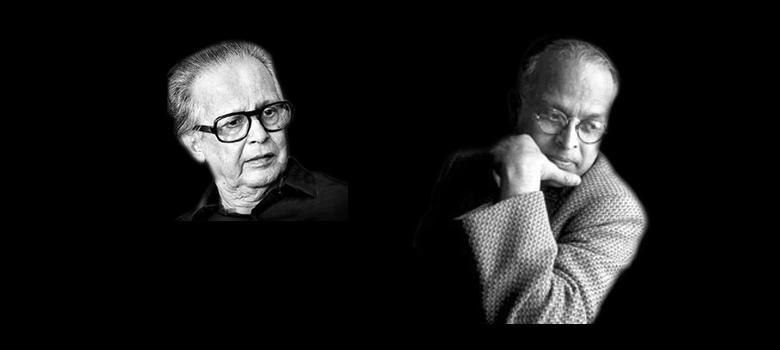
Photo Credit: Wikimedia Commons
This is how those of us who come from Mysore of the Mysore State remember the two famous RKs of the RK family. The neighbourhood was Vontikoppal, an intimate quarter like Malgudi, where communities lived in harmony. And the two RKs were a creation of that milieu.
R K Narayan and R K Laxman were a pair, creative and political but tethered to their beginnings. They were political in the laidback but clearly defined sense that reflects in their work and, I suggest, in the character of Mysoreans.
Laxman and my brother Sreedhar were school friends, who later kept up their support for each other even as Laxman moved to Mumbai and Sreedhar to Delhi. We have cartoon portraits of Sreedhar drawn by Laxman. Narayan and my brother Parthasarathy bonded, as writers and creative persons, at the famous Gemini studios where Parthasarathy was a producer and Narayan often a scriptwriter.
Narayan regularly stayed for long periods in Parthasarathy’s house, regaling us with his sarcasm and jokes during these visits. Laxman was my only contact in Bombay when I moved there in 1957 for a brief spell of paid work. A sort of loner, he expressed helplessness in dealing with mundane things like finding a room for me and chaperoning me.
The two brothers were similar. Their perspective on society was expressed through jokes and irony. Looking back, it amazes me that such strong ideological perspectives could emerge from that quiet, cocooned city of Mysore. But then, that was the special spirit or ethos of the Mysore State, a progressive state headed by rulers who were intelligent and just. It is said that Mahatma Gandhi described the state as Ram Rajya when he spent some time recuperating in the Nandi Hills.
Satire and commentary
It is not surprising that the RKs and other lesser-known but equally gifted persons from Mysore State – civil servants, journalists and businessmen – were different from the products of other states. They were modest compared to the Tamils, but creative in science and technology, administration, literature and believed in communal harmony. The RKs came from those roots, something that should not be forgotten.
Laxman is being praised for being funny, for making people laugh with his cartoons. But his Common Man, as Narayan’s Malgudi, was not just for laughs. It was a medium to show injustice, inequality, corruption. It mocked the leadership that makes promises and yet robs. It was not funny but a powerful satire.
Narayan would be seen by few people today as a feminist, a social commentator with a philosophical perspective. But for those of us who have read his Dark Room, it stands out as a reflection of the worst of the Brahminical society – the terrible treatment of daughters-in-law, of widows. Yes, the radicals of today, impatient and sharp-lined as they are, will challenge this view. But the soft touch, the combination of philosophy and an understanding of society along with skilled writing or drawing – the RK way – I suggest were idioms that current commentators have lost.
Those of us in their 80s are a fast-declining group. Our memories are not well documented since we were active in an age when the digital medium did not exist and when photography and videography were not pervasive. We read, we listened and we participated, mostly in proximity. Proximity was critical to our learning, growing and thinking – not just a part of the build-up of thought and action like today.
It was from that space that the two RKs came.
How Big B became the Voice of India (Courtesy Scroll.in)
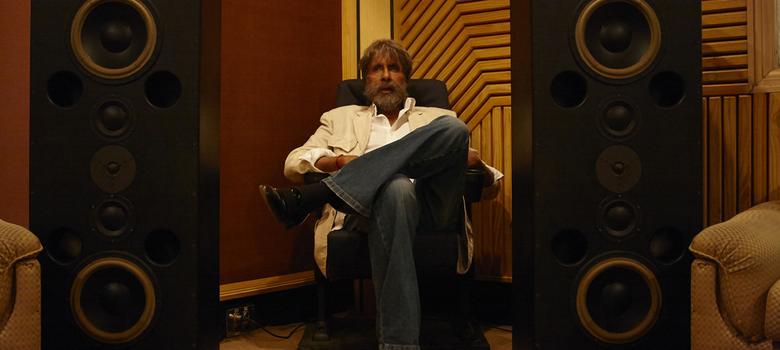
The national anthem has finally gained 100% legitimacy: it has been rendered by Amitabh Bachchan.
There is little that Hindi cinema’s timbre merchant hasn’t lent his voice to, from cement and hair follicle-cooling oil to the touristic wonders of Gujarat. Bachchan’s baritone has a fan following that is distinct from the attention lavished on his tall frame and brooding visage. What Zul Vellani was to Films Division newsreels and Ameen Sayani to the radio, Amitabh Bachchan has been to Hindi film – the sonic symbol of authority for all ages and seasons, second only to the Almighty.
So what happens when that voice emerges from another actor's mouth? This is exactly the premise director Balk examines in his new movie Shamitabh. It revolves around a speech-impaired actor, played by Dhanush, whose voice is dubbed by Bachchan. With Dhanush on the screen and Bachchan in the recording studio, the future looks bright until the shadows creep up, as they inevitably do.
The February 6 release is Balki’s third collaboration with Bachchan after Cheeni Kum and Paa. “The idea is that the voice will stand out on a face that nobody is used to,” explained Balki. There were many levels of dubbing in the movie since Bachchan’s voice had to be matched with Dhanush’s facial expressions. “The movie will be a tribute to Dhanush if audiences forget that they are listening to Amitabh Bachchan’s voice,” Balki said. “Amitji’s voice is one that most people would like to have.”
Vox populi
It’s perhaps inevitable that Bachchan’s voice has become a plot device. His bass tones, crisp diction and rich vocal texture have expressed anger, anguish, desire, humour, maturity, refinement, expertise and wisdom in the movies for well over five decades. Some actors come to be immortalised in memory as still life photographs and posters, while others are remembered in movement, through songs, dances, action sequences, romantic moments and dramatic gestures. In the case of stars of the stature of Bachchan, it’s possible to consider the .jpegs along with the .wavs – these rare individuals match the visual and the aural perfectly, with every part of their selves deemed attractive and therefore worthy of commercial exploitation.
Bachchan's voice has such a following that when the late filmmaker Mukul S Anand got the mega-star to lampoon his typical dialogue delivery style in the 1990 movie Agneepath, the movie dismayed some fans (while winning him new ones).
When Bachchan appeared on television for the first time in the game show Kaun Banega Crorepati in 2000, his modulated rumble leapt off the big screen and reverberated through living rooms. Since then, his pile of brand endorsements has grown enormously. But he has also attracted imitators by the truckload. The growing Bollywoodisation of public culture in the last decade nurtured a cottage industry of soundalikes who were able to imitate the voices of movie stars of the past. At first, the stars were amused. But they later felt threatened. In 2009, Dharmendra’s son Sunny Deol successfully managed to stop a radio show spoof of his father and him, while Bachchan, angered that a tobacco manufacturer had used an impersonator for a television commercial without his consent, threatened to patent his voice.
Bachchan didn’t follow through on his threat (it would not have been legally admissible anyway), but he had sent out a loud and clear message: only he had the right to decide what his voice should sell. If he chose to hawk Daawat basmati rice, it was his business alone.
However, movie stars cannot be everywhere and are not always multi-lingual. Hence, voice artists such as Sudesh Bhonsle, Chetan Shashital and Ninad Kamat have dubbed Bachchan’s lines for many of his television commercials when he has been too busy to do so himself. The television commercial Bachchan did with Sachin Tendulkar for the cola brand Pepsi, for instance, was voiced by Shashital, who has worked on over 30,000 commercials.
Shashital has done similar voice work for other celebrities, including Shah Rukh Khan, Saif Ali Khan and Rajesh Khanna, who endorsed Havells ceiling and table fans in a television commercial in 2012 a few months before he died. The face and body is Khanna, but since the ailing actor was too weak to dub his lines, the voice is Shashital’s.
“I have done a lot of voicing for Mr Bachchan, such as songs from the movie Kyun! Ho Gaya Na..., and many commercials,” said Shashital, who appears in a short sequence in Balki’s Shamitabh as a voice coach. He distinguishes between mimicry, which is what smaller brands might use when they cannot afford to pay a star’s endorsement fees, and star-sanctioned voice work, which is the domain of established companies and advertising agencies.
“The kind of work that I do, I term it voice design,” Shashital said. “You might have heard Mr Bachchan in the movies – there are so many places where you need to think about how he would deliver the dialogue. The difference between mimicry and what we do is the difference between drawing a caricature and doing a portrait.”
Voice work is about creating a character that matches the persona of the star, Shashital explained. “The basic problem is that everybody wants to associate himself with Mr Bachchan,” Shashital said. “If you use an artist’s voice and demean or undermine them in some way, they will object.”
Ninad Kamat, the voice artist and actor who most recently appeared in Crazy Cukkad Family, also dubs for Bachchan, especially when his commercials are replicated in other Indian languages such as Tamil, Telugu and Bengali. “Nobody has the licence to use his iconic voice to sell paan masala and underwear,” Kamat said. “There is a marketing strategy behind using mimicry artists or duplicates to sell brands that are endorsed by him.” There was a phase in the nineties and 2000s when mimicking various actors was common, Kamat said, but that phase has died out after the stars got savvy and began asserting their rights over their voices.
A vital function
Mimicry artists are unwelcome in an age in which movie stars have successfully transformed themselves into commodities. But it is these soundalikes who, through their stage performances and skits, keep an actor’s fan base energised. Working on the principle that imitation is the sincerest form of flattery, mimicry artists trigger fondly held memories of a star’s greatest moments, whether it’s a line of dialogue or a song.
Sudesh Bhonsle, one of the best-known Bachchan vocal impersonators, started off his career as a mimicry artist in 1980. Bhonsle can imitate the voices of a range film personalities, but it is his uncanny ability to reproduce Bachchan’s pitch that earned him fame at stage shows in the early eighties. “I joined the Melody Makers orchestra in 1982, and my specialties were Sanjeev Kumar and SD Burman, but I also used to perform Mr Bachchan’s monologues from such movies as Zanjeer and Andha Kanoon and the songs he has sung himself, such as Mere Saath Aao Mere Doston, Mere Angne Mein and Rang Barse,” Bhonsle said. The first song he sang in Bachchan’s voice was Ya Ali Ya Ali for Shashi Kapoor’s Ajooba in 1991. But it was Jumma Chumma De De from Mukul S Anand’s Hum in the same year that sealed Bhonsle’s reputation as Bachchan’s sonic shadow forever.
Bhonsle has accompanied Bachchan on entertainment shows in India and abroad, at which he has provided both the vocals to Bachchan’s lip syncing as well as sung along with the actor on the stage. After Bachchan complained that his voice had been misused, Bhonsle made it a point to get a written or oral confirmation from the actor before mimicking him at stage shows.
“There was a phase in between when Mr Bachchan had signed a contract with Star Plus stating that his voice would not be used for any other endorsement and at the time, he called me and requested me not to do his voiceover for anything else,” Bhonsle said.
He continues to dub for the star, such as for a recent Binani Cement commercial, and for the Bhojpuri movie Gangadevi, which was produced by the star’s make-up artist and features a cameo by Bachchan and songs in his voice. One of Bhonsle’s most recent assignments is for the unreleased movie Hasmukh Pigal Gaya, which is a tribute to Bachchan as well as Raj Kapoor. Bhonsle sings the track Kisiki Muskurahaton Pe Ho Nisar from the movie Anari in Bachchan’s voice.
A voice like no other
How, according to the voice artists, does Bachchan exercise his vocal cords? “Mr Bachchan knows how to use his words and he knows what his voice is all about,” Shashital observed. “He knows how to get the bass and the highs of his voice out. His voice is a case study – it has evolved over time. In Sholay, it wasn’t as deep as in, say, Laawaris. Even when he shouts, he is completely in control.”
Kamat pointed out that Bachchan has an intense nasal quality in his voice. “I heard that he would sometimes lie down on the floor and record his voice early in the morning for maximum effect,” Kamat said. “He has a voice culture that he has purposefully developed over the years.”
Ironically, one of Bachchan’s early roles was as a mute character in Sunil Dutt’s 1972 drama Reshma Aur Shera. His vocal skills were appreciated early on by filmmaker Mrinal Sen, who got the actor to provide the voiceover for his satire Bhuvan Shome in 1969. The power of the Bachchan soundscape, whether his own or rendered by a soundalike, can be judged by a short film made in 2003 by film journalist and festival programmer Meenakshi Shedde. In Looking For Amitabh, Shedde interviews Bachchan’s visually impaired fans and asks them what they admire in him.
“Anyone can make out Amitabh is going to enter” a frame, explains one fan. It’s not important that these devotees cannot see their idol in the flesh. They can hear him and therefore feel him, and that is all that matters.
Photo Credit: Eros Entertainment
The national anthem has finally gained 100% legitimacy: it has been rendered by Amitabh Bachchan.
There is little that Hindi cinema’s timbre merchant hasn’t lent his voice to, from cement and hair follicle-cooling oil to the touristic wonders of Gujarat. Bachchan’s baritone has a fan following that is distinct from the attention lavished on his tall frame and brooding visage. What Zul Vellani was to Films Division newsreels and Ameen Sayani to the radio, Amitabh Bachchan has been to Hindi film – the sonic symbol of authority for all ages and seasons, second only to the Almighty.
So what happens when that voice emerges from another actor's mouth? This is exactly the premise director Balk examines in his new movie Shamitabh. It revolves around a speech-impaired actor, played by Dhanush, whose voice is dubbed by Bachchan. With Dhanush on the screen and Bachchan in the recording studio, the future looks bright until the shadows creep up, as they inevitably do.
The February 6 release is Balki’s third collaboration with Bachchan after Cheeni Kum and Paa. “The idea is that the voice will stand out on a face that nobody is used to,” explained Balki. There were many levels of dubbing in the movie since Bachchan’s voice had to be matched with Dhanush’s facial expressions. “The movie will be a tribute to Dhanush if audiences forget that they are listening to Amitabh Bachchan’s voice,” Balki said. “Amitji’s voice is one that most people would like to have.”
Vox populi
It’s perhaps inevitable that Bachchan’s voice has become a plot device. His bass tones, crisp diction and rich vocal texture have expressed anger, anguish, desire, humour, maturity, refinement, expertise and wisdom in the movies for well over five decades. Some actors come to be immortalised in memory as still life photographs and posters, while others are remembered in movement, through songs, dances, action sequences, romantic moments and dramatic gestures. In the case of stars of the stature of Bachchan, it’s possible to consider the .jpegs along with the .wavs – these rare individuals match the visual and the aural perfectly, with every part of their selves deemed attractive and therefore worthy of commercial exploitation.
Bachchan's voice has such a following that when the late filmmaker Mukul S Anand got the mega-star to lampoon his typical dialogue delivery style in the 1990 movie Agneepath, the movie dismayed some fans (while winning him new ones).
When Bachchan appeared on television for the first time in the game show Kaun Banega Crorepati in 2000, his modulated rumble leapt off the big screen and reverberated through living rooms. Since then, his pile of brand endorsements has grown enormously. But he has also attracted imitators by the truckload. The growing Bollywoodisation of public culture in the last decade nurtured a cottage industry of soundalikes who were able to imitate the voices of movie stars of the past. At first, the stars were amused. But they later felt threatened. In 2009, Dharmendra’s son Sunny Deol successfully managed to stop a radio show spoof of his father and him, while Bachchan, angered that a tobacco manufacturer had used an impersonator for a television commercial without his consent, threatened to patent his voice.
Bachchan didn’t follow through on his threat (it would not have been legally admissible anyway), but he had sent out a loud and clear message: only he had the right to decide what his voice should sell. If he chose to hawk Daawat basmati rice, it was his business alone.
However, movie stars cannot be everywhere and are not always multi-lingual. Hence, voice artists such as Sudesh Bhonsle, Chetan Shashital and Ninad Kamat have dubbed Bachchan’s lines for many of his television commercials when he has been too busy to do so himself. The television commercial Bachchan did with Sachin Tendulkar for the cola brand Pepsi, for instance, was voiced by Shashital, who has worked on over 30,000 commercials.
Shashital has done similar voice work for other celebrities, including Shah Rukh Khan, Saif Ali Khan and Rajesh Khanna, who endorsed Havells ceiling and table fans in a television commercial in 2012 a few months before he died. The face and body is Khanna, but since the ailing actor was too weak to dub his lines, the voice is Shashital’s.
“I have done a lot of voicing for Mr Bachchan, such as songs from the movie Kyun! Ho Gaya Na..., and many commercials,” said Shashital, who appears in a short sequence in Balki’s Shamitabh as a voice coach. He distinguishes between mimicry, which is what smaller brands might use when they cannot afford to pay a star’s endorsement fees, and star-sanctioned voice work, which is the domain of established companies and advertising agencies.
“The kind of work that I do, I term it voice design,” Shashital said. “You might have heard Mr Bachchan in the movies – there are so many places where you need to think about how he would deliver the dialogue. The difference between mimicry and what we do is the difference between drawing a caricature and doing a portrait.”
Voice work is about creating a character that matches the persona of the star, Shashital explained. “The basic problem is that everybody wants to associate himself with Mr Bachchan,” Shashital said. “If you use an artist’s voice and demean or undermine them in some way, they will object.”
Ninad Kamat, the voice artist and actor who most recently appeared in Crazy Cukkad Family, also dubs for Bachchan, especially when his commercials are replicated in other Indian languages such as Tamil, Telugu and Bengali. “Nobody has the licence to use his iconic voice to sell paan masala and underwear,” Kamat said. “There is a marketing strategy behind using mimicry artists or duplicates to sell brands that are endorsed by him.” There was a phase in the nineties and 2000s when mimicking various actors was common, Kamat said, but that phase has died out after the stars got savvy and began asserting their rights over their voices.
A vital function
Mimicry artists are unwelcome in an age in which movie stars have successfully transformed themselves into commodities. But it is these soundalikes who, through their stage performances and skits, keep an actor’s fan base energised. Working on the principle that imitation is the sincerest form of flattery, mimicry artists trigger fondly held memories of a star’s greatest moments, whether it’s a line of dialogue or a song.
Sudesh Bhonsle, one of the best-known Bachchan vocal impersonators, started off his career as a mimicry artist in 1980. Bhonsle can imitate the voices of a range film personalities, but it is his uncanny ability to reproduce Bachchan’s pitch that earned him fame at stage shows in the early eighties. “I joined the Melody Makers orchestra in 1982, and my specialties were Sanjeev Kumar and SD Burman, but I also used to perform Mr Bachchan’s monologues from such movies as Zanjeer and Andha Kanoon and the songs he has sung himself, such as Mere Saath Aao Mere Doston, Mere Angne Mein and Rang Barse,” Bhonsle said. The first song he sang in Bachchan’s voice was Ya Ali Ya Ali for Shashi Kapoor’s Ajooba in 1991. But it was Jumma Chumma De De from Mukul S Anand’s Hum in the same year that sealed Bhonsle’s reputation as Bachchan’s sonic shadow forever.
Bhonsle has accompanied Bachchan on entertainment shows in India and abroad, at which he has provided both the vocals to Bachchan’s lip syncing as well as sung along with the actor on the stage. After Bachchan complained that his voice had been misused, Bhonsle made it a point to get a written or oral confirmation from the actor before mimicking him at stage shows.
“There was a phase in between when Mr Bachchan had signed a contract with Star Plus stating that his voice would not be used for any other endorsement and at the time, he called me and requested me not to do his voiceover for anything else,” Bhonsle said.
He continues to dub for the star, such as for a recent Binani Cement commercial, and for the Bhojpuri movie Gangadevi, which was produced by the star’s make-up artist and features a cameo by Bachchan and songs in his voice. One of Bhonsle’s most recent assignments is for the unreleased movie Hasmukh Pigal Gaya, which is a tribute to Bachchan as well as Raj Kapoor. Bhonsle sings the track Kisiki Muskurahaton Pe Ho Nisar from the movie Anari in Bachchan’s voice.
A voice like no other
How, according to the voice artists, does Bachchan exercise his vocal cords? “Mr Bachchan knows how to use his words and he knows what his voice is all about,” Shashital observed. “He knows how to get the bass and the highs of his voice out. His voice is a case study – it has evolved over time. In Sholay, it wasn’t as deep as in, say, Laawaris. Even when he shouts, he is completely in control.”
Kamat pointed out that Bachchan has an intense nasal quality in his voice. “I heard that he would sometimes lie down on the floor and record his voice early in the morning for maximum effect,” Kamat said. “He has a voice culture that he has purposefully developed over the years.”
Ironically, one of Bachchan’s early roles was as a mute character in Sunil Dutt’s 1972 drama Reshma Aur Shera. His vocal skills were appreciated early on by filmmaker Mrinal Sen, who got the actor to provide the voiceover for his satire Bhuvan Shome in 1969. The power of the Bachchan soundscape, whether his own or rendered by a soundalike, can be judged by a short film made in 2003 by film journalist and festival programmer Meenakshi Shedde. In Looking For Amitabh, Shedde interviews Bachchan’s visually impaired fans and asks them what they admire in him.
“Anyone can make out Amitabh is going to enter” a frame, explains one fan. It’s not important that these devotees cannot see their idol in the flesh. They can hear him and therefore feel him, and that is all that matters.
Subscribe to:
Posts (Atom)